
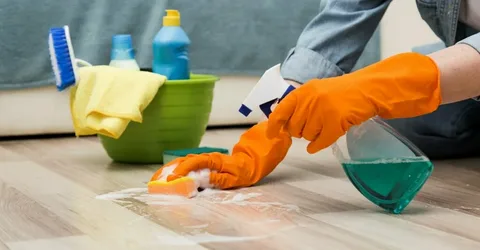
Deep cleaning is supposed to restore a space to a higher standard than regular maintenance, yet most people approach it with weak planning and sloppy execution. The result is a room that looks cleaner but still hides grime, bacteria, and buildup in places they ignored or rushed through. The biggest problem is that people confuse effort with strategy. Scrubbing harder does not matter if you start in the wrong place, use the wrong products, or forget critical areas. Understanding the most common mistakes helps you avoid wasting time and prevents damage to surfaces and appliances.
Ignoring a Top to Bottom Method
One of the most common errors during deep cleaning is cleaning surfaces in the wrong sequence. When people start with floors or counters, every task that follows drops debris downward. Dusting ceiling fans, wiping upper shelves, and cleaning vents all send dirt back onto already cleaned surfaces. This creates double work and leads to inconsistent results. A top to bottom approach is non negotiable. Ceilings, fans, vents, and high fixtures should come first. Shelves, windows, and appliances follow. Floors should be the last step. Without this order, your deep cleaning will always look unfinished no matter how long you spend on it.
Using the Wrong Cleaning Products
People often grab whatever cleaner is under the sink without knowing whether it is safe for the surface they are using it on. This leads to damaged finishes, dull countertops, and streaked glass. Harsh chemicals on granite can erode the sealant. Ammonia based cleaners on stainless steel leave foggy marks. Abrasive powders scratch ceramic, glass, and porcelain. Deep cleaning requires the right product for each surface. It is not about strong chemicals. It is about the correct formulation applied correctly. Choosing poorly wastes time and can permanently ruin new materials.
Skipping High Touch Areas
Most deep cleaning attempts focus on visible grime, but the places people touch the most are the most contaminated. Light switches, remote controls, door handles, appliance handles, faucet knobs, drawer pulls, and banisters gather skin oils, bacteria, and residues daily. These areas rarely look dirty, so people skip them without thinking. A proper deep cleaning highlights these items because they affect hygiene more than floors or walls. Ignoring them creates a false sense of cleanliness and leaves the space just as germ ridden as before.
Cleaning Around Items Instead of Moving Them
Another common mistake is leaving items in place and cleaning around them. People wipe the visible areas and assume the job is done. Dirt collects under furniture, behind appliances, under rugs, inside cabinet corners, and around toilet bases. If you do not move objects, you are not deep cleaning. You are surface cleaning. Deep cleaning requires shifting furniture, lifting items off shelves, pulling out refrigerators if possible, and emptying cabinets when needed. Most of the grime you cannot see is the grime that affects air quality and smell. Cleaning around objects hides the problem rather than solving it.
Not Letting Products Sit Long Enough
Many cleaners require dwell time. That means the product must sit on the surface for several minutes to break down grease, soap scum, or mineral deposits. People spray and immediately wipe, which is essentially the same as using water. Without proper dwell time, stains do not dissolve, bacteria are not removed, and buildup remains. This mistake makes people scrub harder than necessary and still fail to remove the actual problem. Reading labels and following dwell time instructions saves effort and delivers results.
Using Dirty Tools
A deep clean done with dirty cloths, old mops, or clogged vacuums is a waste of energy. Dirty tools spread grime instead of removing it. Microfiber cloths saturated with dust leave streaks and residue. Mops that are not rinsed thoroughly create cloudy floors. Vacuums with dusty filters blow particles back into the air. Cleaning tools must be cleaned during the process. Cloths should be swapped frequently. Mop water should be replaced often. Filters should be cleaned or replaced based on manufacturer instructions. When people ignore tool cleanliness, the space will never reach a true deep clean standard.
Rushing the Process
Deep cleaning takes time. Many people underestimate how long each task requires and end up rushing. They skip corners, avoid detail work, and focus only on what is visible. Rushed cleaning leaves behind residue on faucets, dust in vents, soap scum in showers, and sticky patches in kitchens. Deep cleaning is not a quick task. It demands patience, precision, and attention to detail. Cutting corners eliminates the entire purpose of doing a deep clean to begin with.
Neglecting Ventilation and Air Quality
People focus on surfaces and forget the air. During deep cleaning, dust becomes airborne and chemicals release fumes. Without ventilation, these particles remain trapped in the home. Breathing them in is unhealthy and allows dust to settle again right after cleaning. Opening windows or using fans helps circulate air and reduce pollutants. Changing HVAC filters is also part of a proper deep clean because the system collects and redistributes dust. Skipping ventilation means your freshly cleaned space will not stay clean for long.
Not Finishing With Floor Detailing
Floors are often treated as a final wipedown instead of a detailed finish. Deep cleaning requires more. Carpets need a thorough vacuum with a strong beater bar to remove embedded dirt. Hard floors need targeted cleaning that matches the material. Tile requires grout attention. Hardwood needs a cleaner designed specifically for wood. People who give floors a quick pass leave behind allergens, embedded debris, and streaks that undermine the entire deep cleaning process. A professional grade finish on floors is essential for a truly clean environment.
If You Need Deep Cleaning in Windsor Ontario
If you want the job handled properly without these mistakes and you are in Windsor Ontario, connect Cleaning CAN for deep cleaning done with precision and complete attention to detail.
Faqs
What is the most common mistake people make during deep cleaning?
The most common mistake is confusing effort with strategy. Scrubbing harder does not help if cleaning is done in the wrong order, with incorrect products, or without addressing hidden and high-impact areas.
Why is a top-to-bottom cleaning method important?
A top-to-bottom method prevents dust and debris from falling onto already cleaned surfaces. Starting with ceilings, fans, and vents and finishing with floors ensures thorough and consistent results.
Can using the wrong cleaning products damage surfaces?
Yes. Using incorrect or harsh cleaners can damage materials such as granite, stainless steel, glass, and ceramic. Deep cleaning requires surface-appropriate products, not stronger chemicals.
What areas are most often skipped during deep cleaning?
High-touch areas like light switches, door handles, appliance handles, remote controls, and drawer pulls are frequently overlooked, even though they collect the most bacteria and residue.
Why does deep cleaning take more time than regular cleaning?
Deep cleaning involves moving furniture, allowing proper dwell time for products, cleaning tools during the process, improving air quality, and finishing floors thoroughly. Rushing prevents true cleanliness.